Easter carries a message many families deeply need, especially when old patterns keep showing up in daily relationships.
The death and resurrection of Jesus remind us that painful things do not have to define the future. What looked finished on the cross became the beginning of restoration. What appeared like loss became victory. What carried pain became the path to redemption.
That truth matters in family life because many homes are quietly battling inherited patterns that have lasted for years.
Some families have normalised harsh correction.
Some have accepted silence after conflict.
Some have learned to live with emotional distance, unresolved offence, cold conversations, repeated anger, or words that wound more than they heal.
Over time, unhealthy responses can begin to feel ordinary simply because they have existed for so long.
But not everything inherited should be preserved.
Some things must end so healthier things can begin.
Bible says, “To give them beauty for ashes, the oil of joy for mourning, the garment of praise for the spirit of heaviness.”
This is the language of redemption.
God does not ignore broken places. He transforms them.
That is why healing in a family is not betrayal of the past. It is refusing to let pain keep deciding what the future will look like.
Many people fear that confronting unhealthy family patterns means dishonouring parents, history, or upbringing. But healing is not dishonour.
Healing is wisdom.
A person can appreciate what was good, acknowledge what was painful, and still decide that harmful cycles will not continue.
Easter shows this beautifully.
Jesus carried pain, rejection, betrayal, and suffering, yet He did not return bitterness. He did not reproduce hatred. He did not allow suffering to define His response.
That is one of the strongest lessons families can learn.
Pain should not become permission to damage others.
This is often where family transformation begins: when someone decides that what hurt them will not become what shapes how they treat others.
A parent may realise:
I was corrected harshly, but I do not have to correct harshly.
A spouse may realise:
Silence was normal where I came from, but I do not have to build silence here.
An adult child may realise:
Anger was common in my family, but it does not have to control mine.
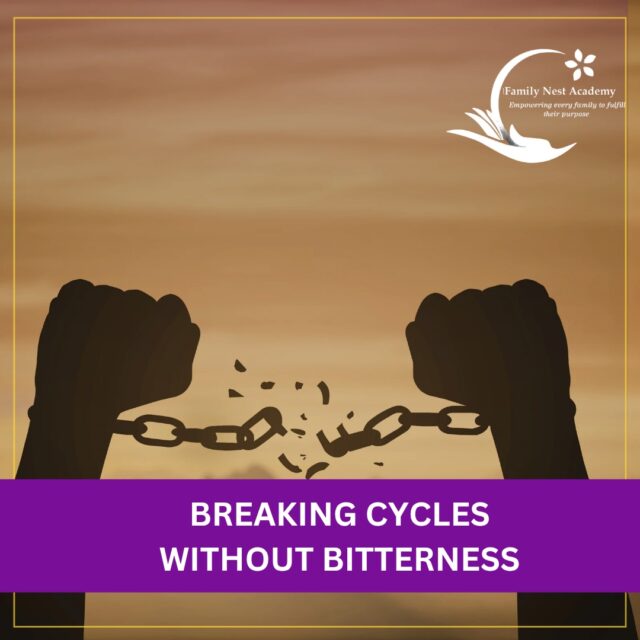
Breaking cycles requires more than awareness. It requires intentional replacement.
You cannot simply remove a pattern, you must replace it with something healthier.
That means:
• speaking gently where anger usually rises
• listening where interruption has become normal
• apologising where pride usually resists
• praying where emotional reaction would normally lead
• choosing calm when pressure increases
Small decisions repeated consistently become new culture.
Families do not change in one dramatic moment.
They change through many intentional moments.
This is why resurrection matters beyond church celebration.
It reminds every family that change is possible, even where patterns have lasted for generations.
What has existed for years can still be transformed.
What has been painful can still become beautiful.
Reflection
What have we normalised in our family that needs transformation?
Action
Choose one unhealthy response this week and intentionally replace it with a godly one.
Because sometimes one healed response begins a completely different family story. ✨
Discover more from Family nest Academy
Subscribe to get the latest posts sent to your email.
